Angels in Aprons: How Family Table Collaborative Is Feeding Cape Cod and Building Community
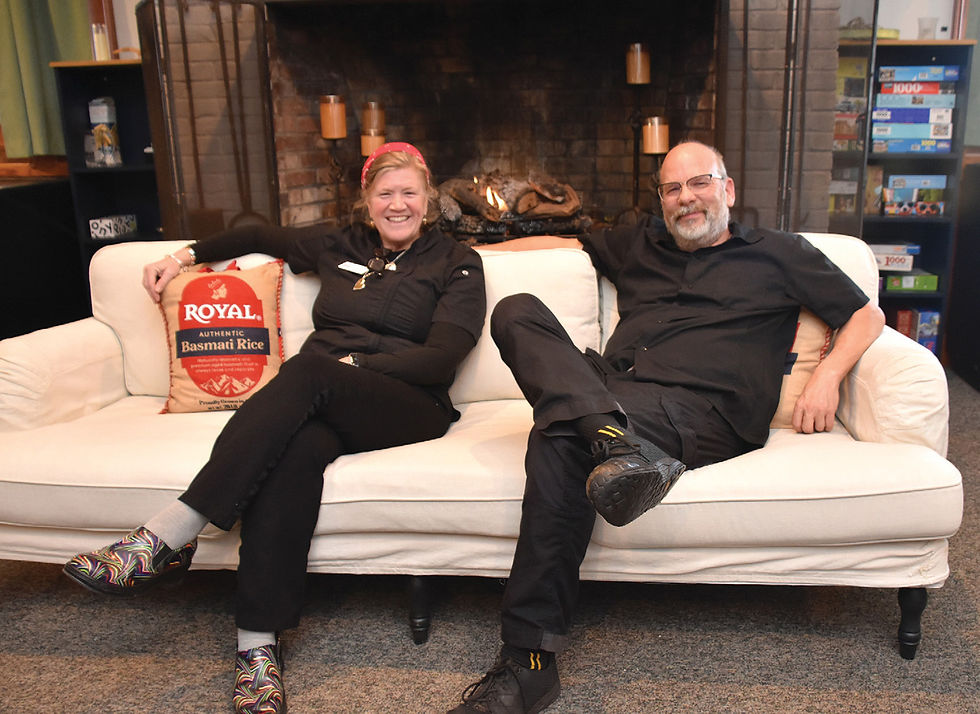
Walking into the spacious kitchen of Family Table Collaborative (FTC) at the former Riverway Restaurant in South Yarmouth feels, at first, much like stepping into any busy commercial kitchen. Southern gravy simmers on the stove, filling the room with its aroma, while chefs call out instructions and team members move between prep stations.
But look a little closer, and it becomes clear that this is not an ordinary restaurant kitchen.
The people peeling potatoes, chopping vegetables, slicing ingredients, preparing sauces, and packaging hundreds of meals span generations. High school culinary students work alongside retirees, professional chefs, staff members, and community volunteers. Together, they prepare meals that may be distributed for free in Eastham or Hyannis, delivered to local councils on aging and veterans’ services, served at a Cape Symphony concert, or prepared for one of FTC’s private catering events.
At Family Table Collaborative, food does more than feed people. It brings a community together.
A Mission Born During the Pandemic
Jeni Wheeler and Harry Henry founded Family Table Collaborative during the height of the COVID-19 pandemic.
Longtime volunteer Dianne Mahoney remembers asking Wheeler what they were going to do when the world suddenly shut down.
Wheeler’s response was simple: “We’re going to feed people.”
And that is exactly what they did.
Years later, the mission continues as the demand for fresh, nutritious food across Cape Cod keeps growing. According to the Cape Cod Commission, the Cape has a lower median income than the Commonwealth of Massachusetts while simultaneously facing a higher cost of living. For many residents, that combination can make putting healthy food on the table increasingly difficult.
Since FTC began, its staff and volunteers have prepared well over a quarter of a million meals while rescuing more than 400,000 pounds of produce that otherwise could have entered the waste stream.
Food insecurity, Wheeler emphasizes, is not driven by economics alone.
Some people collect meals for relatives, friends, or neighbors who have mobility challenges. Others are working two or more jobs just to afford life on Cape Cod. When someone is rushing from one job to another, preparing a balanced dinner can quickly fall to the bottom of the priority list. Convenient food often means highly processed, pre-packaged meals that may offer little nutritional value.
Food insecurity can be temporary or long-term, and the people experiencing it may look no different from anyone else in the community. Sometimes, as Wheeler suggests, the face of food insecurity can look very much like the person looking back at us in the mirror.


Hundreds of Volunteers Answer the Call
As FTC’s mission has expanded, so has the number of people willing to help.
Today, Family Table Collaborative has one of the largest volunteer teams on Cape Cod, with more than 560 volunteers currently on its list. Wheeler credits Harry Henry with carefully maintaining an accurate count as volunteers naturally come and go. At one point, the organization had more than 900 people on its volunteer roster.
Each person arrives with a different reason for wanting to serve. Some volunteers even began their relationship with FTC as recipients of its meals.
Paula Perrone is one of them.
During the pandemic, Perrone visited a food distribution to pick up two meals for a friend who was unable to leave home. Wheeler asked how many meals she needed, and when Perrone answered “two,” Wheeler assumed they were for Perrone and her partner.
Perrone explained that the meals were actually for a friend and that she did not need anything for herself.
Wheeler then asked what Perrone was having for dinner.
Perrone said she did not know and would find something at home.
Wheeler told her to wait, ran back, and returned with another meal for her. Perrone remembers pulling away from the distribution and crying.
That experience inspired her to begin volunteering with FTC.
Giving Young Culinary Students Real-World Experience
Some members of the FTC kitchen team are beginning their careers much earlier.
Chef Matt Tropeano, a culinary instructor at Cape Cod Tech in Harwich, works with students including Landon O’Neill, McKenzie Sylvia, and Kristlee Whitehead, giving them valuable experience inside a functioning commercial kitchen.
O’Neill and Sylvia spend 30 hours each week at FTC through Cape Cod Tech’s Co-op program.
Even younger students are getting involved. Monomoy School eighth graders help at FTC every Thursday morning.
Mahoney says she particularly enjoys seeing the students arrive. Some may initially come in dragging their feet, she jokes, but by the time their volunteer shift ends, many admit that they actually had fun.


New Careers and New Skills
FTC has also become a place where people can begin a second chapter in their professional lives.
Jenny Burkhardt, FTC’s lead baker, first became involved by baking cookies for the Cape Symphony when the organization was not yet producing them in-house. She took on the lead baker position in November after volunteering with FTC for four years and baking for the organization for the previous two.
Before entering the kitchen professionally, Burkhardt spent 15 years as a marine biologist with The Center for Coastal Studies in Provincetown, where her work included water quality monitoring.
Her baking responsibilities began with small desserts for events, then expanded to larger cakes and an increasing variety of sweets. Eventually, Wheeler was able to create a position for her. Today, Burkhardt handles baking and also helps operate catering events on the day they take place.
For Lee Mitchell, volunteering at FTC offers a different kind of opportunity.
After retiring from a 40-year career with Blue Cross Blue Shield of Massachusetts, Mitchell found both community and a chance to continue learning. She loves working with the other volunteers and picking up new kitchen skills, including a better method of cutting peppers recently demonstrated by
Chef Nick Caplice.
Her least favorite kitchen task?
Onions.
Standing over a pile of chopped onions with watering eyes, Mitchell can still laugh about it.
Working alongside her, Monica Campobello says she finds it remarkable to see what FTC's chefs are able to create from the food that comes through the kitchen.
From Surplus Food to Healthy Meals
That food is at the center of another major part of FTC’s mission: preventing perfectly usable food from becoming waste.
Wheeler notes that while the United States represents about 5% of the world’s population, it produces approximately 25% of the world’s food waste.
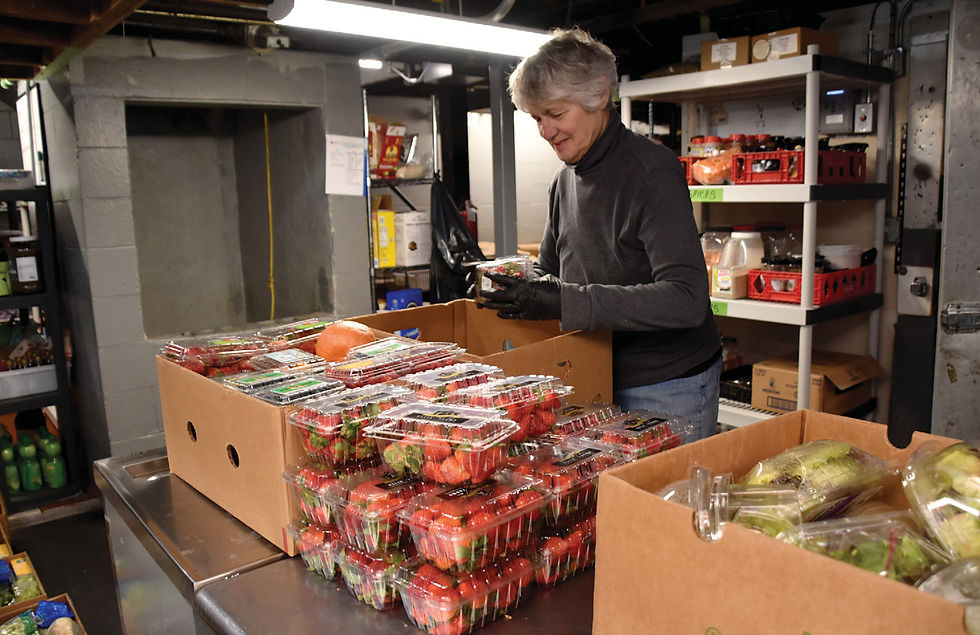
Unsold surplus food arrives at FTC every day from grocery stores and markets. Whole Foods in Hyannis is the organization’s primary supplier, although other markets are increasingly contributing as they learn about FTC’s work.
Whole Foods makes daily donations both to food pantries and to FTC.
Wheeler is careful about the terminology. The ingredients arriving at FTC are not “waste.” They are surplus food that remains perfectly good to eat. It is only when that surplus cannot be redirected and used that it becomes waste.
FTC makes sure as much of it as possible is transformed into something nourishing.
Like an Episode of Chopped Every Day
For the chefs, working with unpredictable food donations creates a daily culinary challenge.
Chef Nick Caplice compares it to an episode of Chopped.
There is no predictable schedule telling the kitchen team what will arrive. One day, three cases of ripe avocados may suddenly show up, all needing to be used immediately. The chefs have to decide quickly what to create before the food spoils.
That unpredictability encourages creativity.
Caplice is one of FTC’s newer hires. Before joining the organization, he spent approximately 20 years working in kitchens, ranging from fine dining restaurants to bars serving primarily frozen fried foods.
Eventually, he wanted something different.
He had grown tired of cooking food he either could not afford himself or would not want to eat. He had also previously worked with organizations similar to FTC and understood that food assistance did not always mean receiving food that was particularly good or healthy.
At FTC, he found both.
The organization rescues food that might otherwise be discarded and transforms it into nutritious meals for the community.
On one particular prep day, Caplice and the kitchen crew were preparing for a distribution of more than 400 meals. The previous day, 16 volunteers had helped produce much of the food needed for Thursday’s distribution.
The next steps were to organize everything and then package it.
Meanwhile, perishable ingredients arriving in the kitchen still needed immediate attention. Caplice planned to prepare a large quantity of vegetable sauce, cook it down, and freeze it for future use.
At FTC, there is always something that needs to be done.


A Different Kind of Kitchen Culture
FTC has also taught Caplice something he did not necessarily learn in traditional restaurant kitchens: patience.
His professional culinary training came from chefs who pushed their crews relentlessly for 12-hour shifts with few opportunities to slow down.
The FTC kitchen operates differently.
Many volunteers are there for approximately three hours. They want to contribute, but they are also there to enjoy themselves, talk with others, learn something new, and make something meaningful for their community.
Caplice has learned to adjust his teaching style accordingly.
Packaging Hundreds of Meals
When packaging and distribution day arrives, another group of volunteers comes through the doors.
Their job is to portion, label, and box the week's meals according to orders submitted by community members and partner organizations.
Special labels identify possible allergens as well as vegan and vegetarian options, helping ensure people with different dietary needs can safely enjoy the meals.
Distribution co-leader Kathy Kurniawan demonstrates the correct portions: mashed potatoes, roasted pork loin, southern thyme gravy prepared the previous day by Chef Eric LaBonte, and roasted carrots.
The goal is to make every serving hearty.
Three slices of pork are placed in each portion, but if the slices are thin, volunteers are instructed to add a fourth.
An assembly line forms and the team gets to work.
As meals are completed, fellow distribution co-leader Dianne Mahoney organizes them into separate cartons according to their destinations. Four volunteer drivers will eventually deliver the meals.
Because FTC relies on changing food donations, even a single packaging session can evolve as ingredients run out. Roasted carrots may be replaced by Brussels sprouts. Mashed potatoes may transition to rice. Once the roasted pork loin is gone, a creamy soppressata pasta may take its place, while sautéed zucchini and summer squash replace the sprouts.
The constantly changing donations mean FTC's menu is always revolving.


Responding to the Blizzard of '26
There are moments, however, when even FTC's rescued food supply cannot meet the scale of an emergency.
When the Blizzard of '26 struck Cape Cod in late February, tens of thousands of residents lost electricity and heat. For some households, the outage lasted as long as five days.
Warming shelters opened so residents could escape the cold, but the people arriving at those shelters also needed food.
Local chefs immediately stepped forward.
Mick Formichella of LUNE in Dennis Port and his team joined FTC's efforts, as did Chef Matt Tropeano and others.
The organization had chefs and willing volunteers. What it needed was enough food.
Wheeler reached out to World Central Kitchen (WCK), the organization founded by Chef José Andrés that provides meals in response to humanitarian, climate, and community crises around the world.
As a member of WCK's Chef Corps, Wheeler was able to call for assistance, and World Central Kitchen responded.
With supplies secured, FTC's chefs, volunteers, staff, and even Cape Cod Tech students joined the effort. Some students were dropped off by their parents simply because they wanted to help.
Together, the team produced an extraordinary 15,000 meals in just six days.


Making the Mission Financially Sustainable
FTC's services continue to expand, but ensuring the organization's financial survival is equally important.
Cape Cod is home to more than 2,000 nonprofit organizations, many doing vital work for their communities. Yet nonprofits frequently depend heavily on grants and donations, funding sources that can decline or disappear.
Family Table Collaborative has taken steps to reduce that vulnerability.
Although grants and donations remain essential, FTC has developed a catering division that generates revenue to support its charitable work.
The organization caters corporate gatherings, family events, fundraisers, and other private functions. It also operates concessions during Cape Symphony concerts.
According to Wheeler, this catering operation is what helps make FTC's model sustainable.
In the previous year, catering generated more than 50% of FTC's operating budget.
Even more importantly, Wheeler believes the model can be replicated. Communities elsewhere in the country could potentially combine food rescue, meal distribution, volunteer engagement, and revenue-generating catering to help support their own neighbors.
The Tavern at FTC
Another idea for expanding FTC's impact came from Chef Jeff Avery, who saw potential in an unused part of the former Riverway Restaurant.
The building's bar had remained unused after FTC moved into the property.
Avery led an effort to transform it into The Tavern at FTC, an alcohol-free pub experience designed for people who want to enjoy a night out without the temptations or atmosphere associated with alcohol.
The Tavern offers creative specialty mocktails alongside a weekly pre-fixe five-course meal.
When Avery returned in the spring to his position as a chef aboard a research vessel operating out of Woods Hole, Chef Paulene Jones, formerly of Jones'n at Craigville snack bar, took over as chef de cuisine.
The Tavern is closing for the summer but is expected to reopen in the fall.
Building FTC's Next Chapter
Family Table Collaborative is now looking toward an even more ambitious future.
The organization has launched a capital campaign to purchase the property it currently occupies.
Owning the site would allow FTC to expand its programs and provide greater long-term security for its mission.
Future plans include creating a community kitchen for food entrepreneurs, opening a local makers' marketplace, establishing The Commons at Riverway Café and Tavern, and even constructing apartments that could provide affordable housing for employees.
Each project is part of a larger goal: making sure Family Table Collaborative
remains a permanent resource for Cape Cod.
Cape Cod's Angels in Aprons
Fred Rogers famously advised people to “look for the helpers” during frightening or difficult times.
On Cape Cod, many of those helpers can be found wearing aprons inside the Family Table Collaborative kitchen.
They are professional chefs and retirees. They are high school culinary students and eighth graders. They are people who once came to receive a meal and later returned to prepare meals for someone else. They are bakers, drivers, organizers, volunteers, instructors, and community members who simply decided to help.
Whether Cape Cod is facing a sudden crisis like the Blizzard of '26 or the ongoing challenge of food insecurity, Family Table Collaborative continues to answer the need.
One rescued ingredient, one volunteer shift, and one hearty, healthy meal at a time.
Family Table Collaborative
Original source material by Larry Egan, co-publisher of Edible Cape Cod with his wife Cori. Egan is a New England Associated Press award-winning writer and commentator and host of The Handyman Hotline on Saturdays from 1–3 p.m. on 95.1 WXTK-FM. He is also the recipient of the 2025 Peter Gammons Award of Excellence and Distinction from the Cape Cod Baseball League, recognizing more than two decades of broadcasting CCBL games. Away from broadcasting and writing, he can often be found on Cape Cod's trails with his Portuguese Water Dog, Archie.
Read More: A Seat at the Table, Always


Comments